Picture this: The weather changes unexpectedly, school holidays shift, or a TikTok trend goes viral overnight. Suddenly, the products you thought would fly off the shelves are slow to move. Meanwhile, stock runs low on the latest must-have item your team failed to see coming. For Australian retailers, unpredictable demand is the new norm—and traditional forecasting methods just can’t keep up anymore.
Table of Contents
ToggleIn today’s fast-moving retail environment, failing to predict demand accurately is costly. Overstocking leads to wasted inventory and profit margins that melt away with markdowns at season’s end. Understocking frustrates customers, damages trust, and sends them straight to competitors. Even small mismatches can have ripple effects throughout your supply chain and balance sheet. For Australian retailers operating in fiercely competitive local and global markets, keeping up with demand swings is not just about profit—it’s about survival.
If demand forecasting isn't personalized, fast, and adaptive, you're gambling with every purchase order. The risks? Lost sales. Increased waste. Higher storage costs. Slower growth. And a team that spends more time guessing than selling.
For expert guidance tailored to Australian SMBs, visit Work Made Simple (WMS).

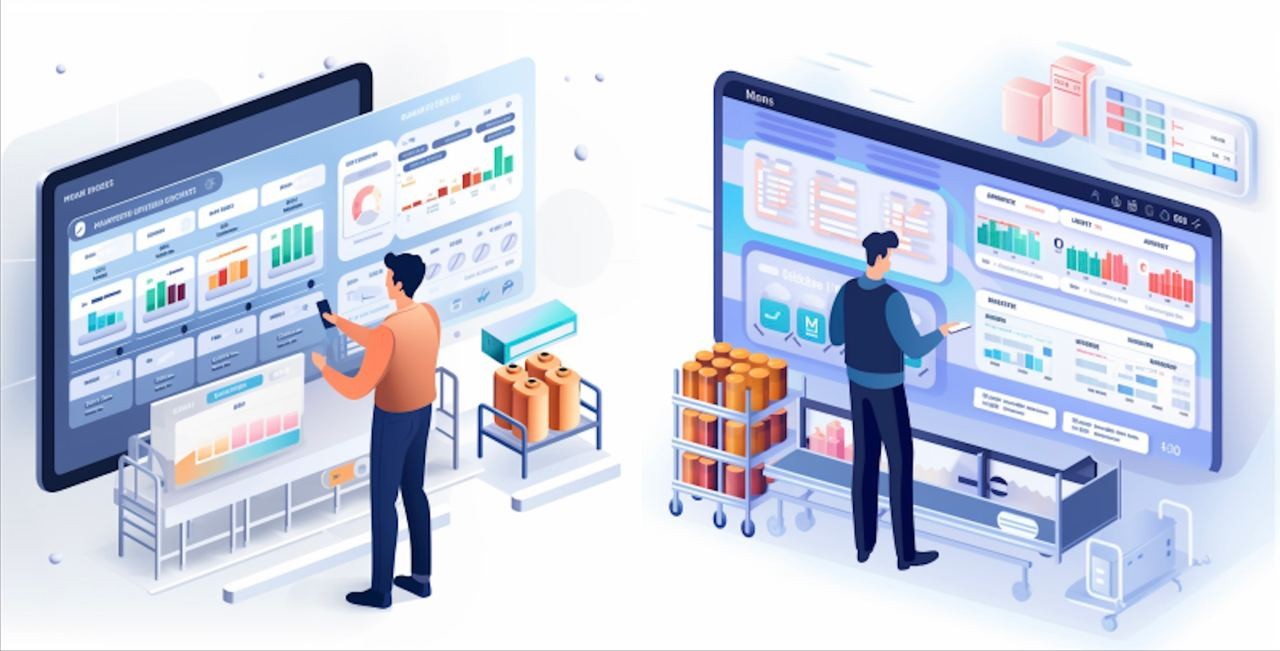
Microsoft Dynamics 365 Business Central steps in with AI-powered demand forecasting—an integrated, easy-to-use platform that empowers your team to turn data into confident, timely decisions. By combining historical sales, seasonal trends, real-time events, and external factors like weather or social media buzz, AI forecasting in Business Central gives you the clarity and agility you need to thrive.
No more guessing with yesterday’s spreadsheets. No more scrambling to cover unexpected shortages. Business Central’s AI turns complex data into practical insights, so you can:
– Order the right stock, at the right time, in the right quantities
– Reduce waste and clearance markdowns
– Respond quickly to market trends and disruptions
– Free your staff from manual calculations and “gut feel” decisions
Customer preferences fluctuate rapidly, driven by trends, events, and social media. Both online and in-store demand can shift overnight.
Many retailers collect vast amounts of sales, inventory, and marketing data, but struggle to turn it into actionable forecasts.
Traditional forecasting relies heavily on spreadsheets, historic averages, or intuition—slow, error-prone, and unaware of outside influences.
Australia’s geography brings unique challenges: different local events, weather patterns, and unpredictable shipping lead times impact demand at each store location.
Without AI, retailers often react too late, missing short-term surges (like unexpected warm winters or viral product launches) and failing to optimize stock.

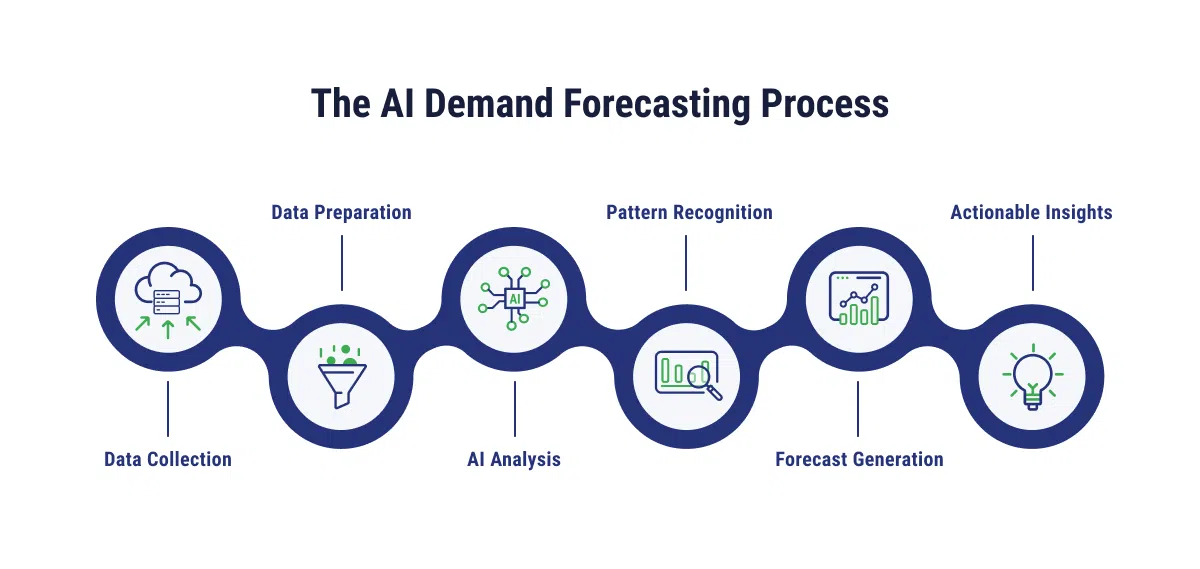
Business Central’s AI models analyze thousands of variables—including historical sales, promotions, competitor moves, weather patterns, and local events—to predict demand with precision. Instead of relying on averages, AI adapts to new information in real time, updating forecasts as conditions change.
The Business Central dashboard translates complex numbers into simple visual insights anyone can understand. Retail teams get clear projections for sales, inventory levels, and reorder points—often with recommended actions attached.
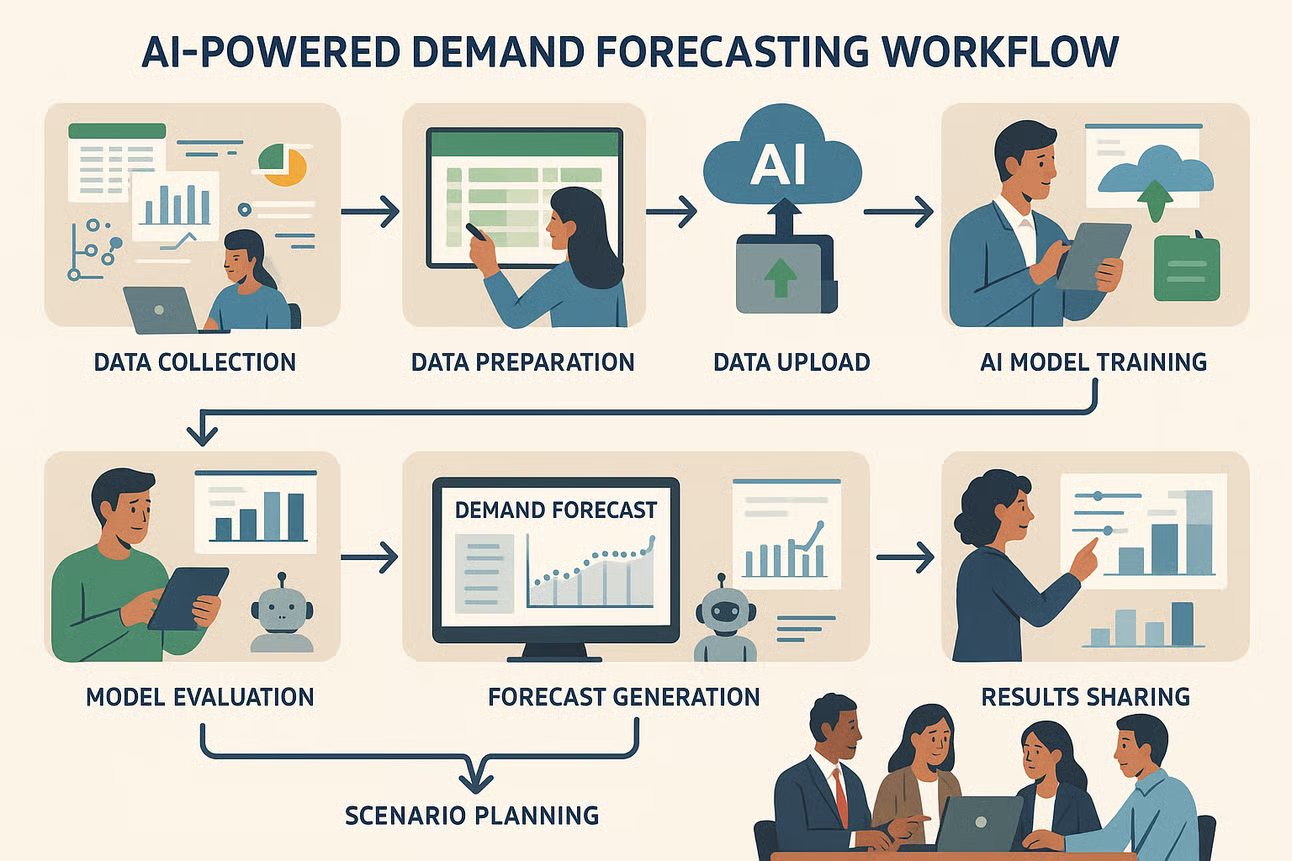
Business Central AI enables “what-if” scenario planning. Want to predict the impact of a sudden price drop or upcoming promotion? The system models multiple outcomes so you can make confident decisions before acting.
AI forecasting doesn’t just predict demand—it recommends replenishment orders and triggers alerts when inventory falls below critical levels, reducing the risk of running out or overstocking.
The Business Central dashboard translates complex numbers into simple visual insights anyone can understand. Retail teams get clear projections for sales, inventory levels, and reorder points—often with recommended actions attached.
For retailers with multiple stores, Business Central can generate forecasts by individual location, considering unique demand drivers (like different weather or local holidays), rather than forcing “one size fits all” models.
– Ensure sales, inventory, and supply chain data are accurate, timely, and complete.
– Integrate data across channels (POS, e-commerce, warehouses) for maximum visibility.
– Engage marketing, supply chain, and sales teams when setting up forecasting models.
– Hold regular cross-functional reviews to validate AI-generated forecasts and align strategies.
– Tailor which external factors (weather, holidays, competitor pricing) are factored into your models.
– Periodically review the weight AI gives each variable and adjust as needed for your category.
– Use “what-if” tools to stress-test forecasts under multiple conditions (promotions, external events, supply chain disruptions).
– Prepare contingency plans for high-impact scenarios.
– Track forecast accuracy over time, noting which types of products, locations, or seasons are most challenging.
– Use feedback to refine models and gradually improve results.
– Allow Business Central to automate basic replenishment for high-volume items.
– Set rules for exception handling—like reviewing unusual spikes before approving large orders.
– Provide training on reading AI-powered dashboards and reports.
– Encourage a culture of continuous improvement and openness to new insights.
– Pilot AI forecasting in one department or store, measure results, refine your approach, then expand system-wide.
– Review forecasts weekly or daily—AI updates faster than traditional methods, so take advantage of real-time agility.
– Engage experts like Work Made Simple (WMS) who can customize Business Central to your specific needs and support ongoing optimization.
AI-driven forecasting is transforming Australian retail, giving local businesses the confidence and capability to respond faster than ever. The adoption rate of AI tools among Australian retailers now exceeds 70% (BizCover, 2025), and the sector is projected to generate over $1.9 billion in AI-driven revenue by 2030 (Grand View Research, 2024). The benefits are clear: less waste, better margins, and happier customers.
By shifting from reactive to predictive operations, retailers future-proof their stores against market swings and confidently seize emerging opportunities.
The market is changing—and fast. Relying on yesterday’s methods risks leaving your business behind. AI-powered demand forecasting in Microsoft Business Central empowers Australian retailers to meet customer expectations, maximize accuracy, and drive growth.
Ready to see these results firsthand? Contact WMS today to request a demo and discover how Business Central's AI forecasting can help your retail business stay ahead of demand.
It uses artificial intelligence to analyze multiple factors—like sales history, weather, and trends—to predict future demand with remarkable accuracy.
Business Central leverages Microsoft Azure AI to turn complex data into clear, visual forecasts and actionable recommendations
Accurate predictions prevent stockouts, reduce waste, optimize ordering, and increase sales.
It combines sales history, promotions, external factors, and real-time events to build dynamic predictions.
Retailers using AI-driven forecasting report 20% higher forecast accuracy.
Yes, forecasts can be generated for individual stores, taking local factors into account.
Yes, it recommends replenishment quantities based on predicted demand, reducing manual work.
Business Central enables real-time scenario planning so you can model multiple outcomes.
Begin with a pilot, work with a partner like WMS for setup and training, then scale quickly to capture the benefits.