Your best-selling product shows 15 units in stock. A customer orders 10 units online. Your warehouse team discovers only 3 units on the shelf. The customer gets a cancellation email and shops elsewhere. Meanwhile, your slow-moving items occupy expensive warehouse space, tying up cash that could fuel growth.
Table of Contents
ToggleThis scenario plays out thousands of times daily in Australian retail. Poor inventory accuracy doesn’t just frustrate customers—it hemorrhages profit through lost sales, emergency shipping costs, markdowns on excess stock and operational inefficiency. The good news? Real-time inventory management through ERP systems can transform your accuracy from the industry average of 65% to 92% or higher.
For context on how ERP drives omnichannel retail success in Australia, refer to our comprehensive guide.

Devinder Sareen is a Microsoft Dynamics 365 Business Central and LS Retail partner with 20+ years of ERP implementation experience across Australian retail, distribution and manufacturing.
Before diving into solutions, let’s quantify the problem. Most retailers underestimate how much inventory inaccuracy actually costs their business.

When inventory records show stock but shelves are empty, you lose more than one sale. Research shows 70% of customers who encounter stockouts purchase from competitors instead of waiting. Each stockout creates a ripple effect:
Example calculation: A retailer with $2M annual revenue experiencing a 12% stockout rate loses approximately $168,000 in direct sales, plus incalculable brand value and customer lifetime value.

Excess inventory is equally destructive. Every dollar tied up in slow-moving stock is a dollar unavailable for high-performing products or growth investments.
Reality check: Industry data shows carrying costs range from 20-30% of inventory value annually. A retailer with $500k in excess inventory pays $100k-$150k per year just to hold products that aren’t selling.
Real-time inventory management means every transaction—sale, return, transfer, receipt—updates your inventory records instantly across all channels and locations. No delays, no batch processing, no discrepancies.

When a customer buys a product in-store, the inventory count updates immediately. Your online store reflects the new quantity before the customer reaches the parking lot. Warehouse teams see accurate available-to-promise quantities for fulfillment decisions. Purchasing teams receive automatic alerts when stock drops below reorder points.
Real-time inventory management means every transaction—sale, return, transfer, receipt—updates your inventory records instantly across all channels and locations. No delays, no batch processing, no discrepancies.
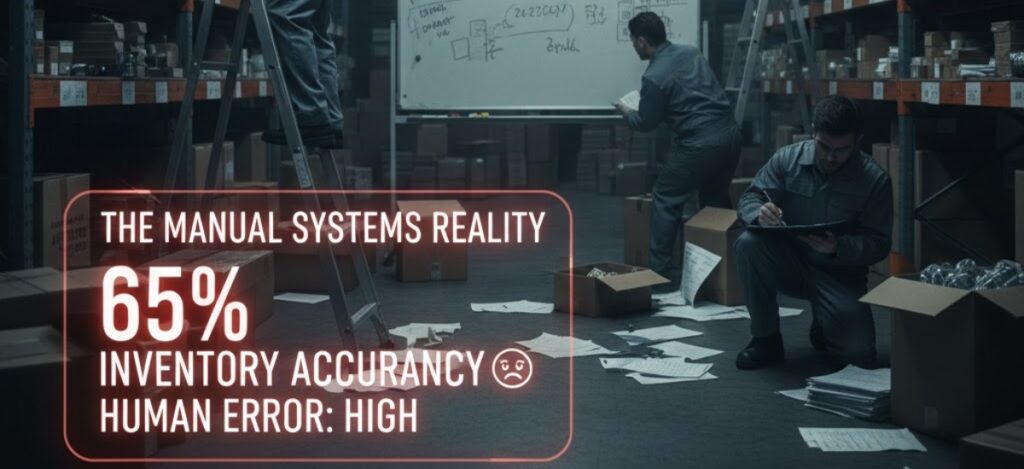
Most retailers using spreadsheets, legacy systems or disconnected software achieve only 60-70% inventory accuracy. Here’s why:
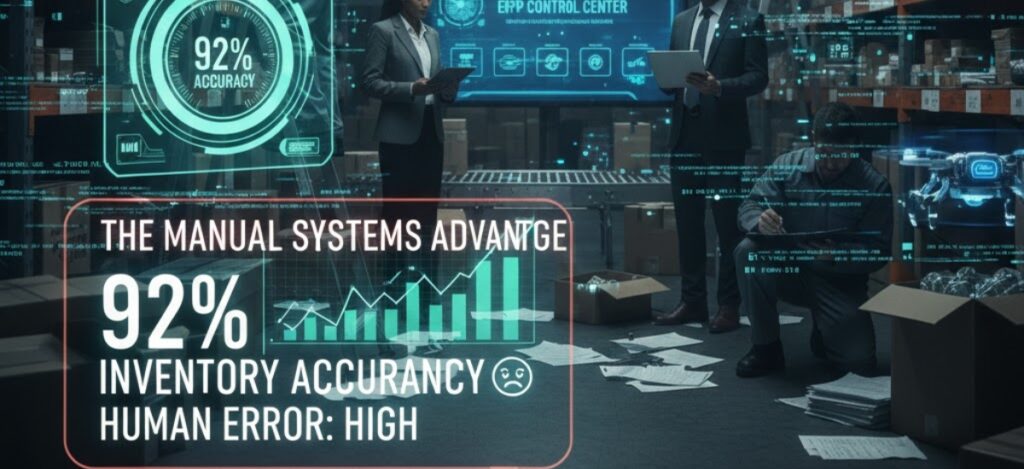
Retailers implementing comprehensive inventory management through ERP consistently achieve 92-98% accuracy. The improvement comes from systematic changes:
Let’s calculate the financial impact for a mid-sized Australian retailer:
| Metric | Annual Impact |
|---|---|
| Annual Revenue | $3,000,000 |
| Stockout Rate (Before) | 12% |
| Stockout Rate (After) | 2% |
| Recovered Revenue | $300,000 |
| Excess Inventory (Before) | $400,000 |
| Carrying Cost (25%) | $100,000 |
| Excess Reduction (40%) | $160,000 freed |
| Cost Savings | $40,000 |
| Total Annual Benefit | $340,000 |
This example demonstrates why inventory accuracy improvement pays for ERP implementation within months for most retailers.
Not all inventory management systems deliver equal results. When evaluating ERP solutions, prioritize these capabilities that separate industry leaders from legacy systems.
Manual reordering creates inconsistent results. ERP systems calculate optimal reorder points based on sales velocity, supplier lead times and safety stock levels. When inventory hits the threshold, the system generates purchase orders automatically.
Reorder Point = (Average Daily Sales × Lead Time) + Safety Stock
Advanced ERP systems analyze historical sales patterns, seasonal trends and external factors to predict future demand. This enables proactive purchasing decisions rather than reactive scrambling.
12-24 months sales history, promotional calendars, market trends and supplier lead times. Accuracy improves over time as the system learns your business patterns.
For retailers with multiple stores or warehouses, knowing total inventory is insufficient. You need location-specific visibility to:
ABC analysis categorizes inventory by value contribution. ERP systems automatically classify products and adjust management strategies:
Microsoft Dynamics 365 Business Central is the platform WMS IT recommends for Australian retailers and distributors seeking real-time inventory management. Here’s how the technology stack works in practice:
For distributors and retailers with warehouse operations, Tasklet Mobile WMS integrates directly with Business Central to eliminate manual data entry:
Technology alone won’t fix inventory problems. Success requires combining the right system with disciplined processes.
For detailed guidance on implementing your inventory management system, see our 90-day ERP implementation roadmap.
Based on WMS IT’s implementation experience with Australian retail and distribution businesses, here is a realistic timeline for achieving real-time inventory accuracy:

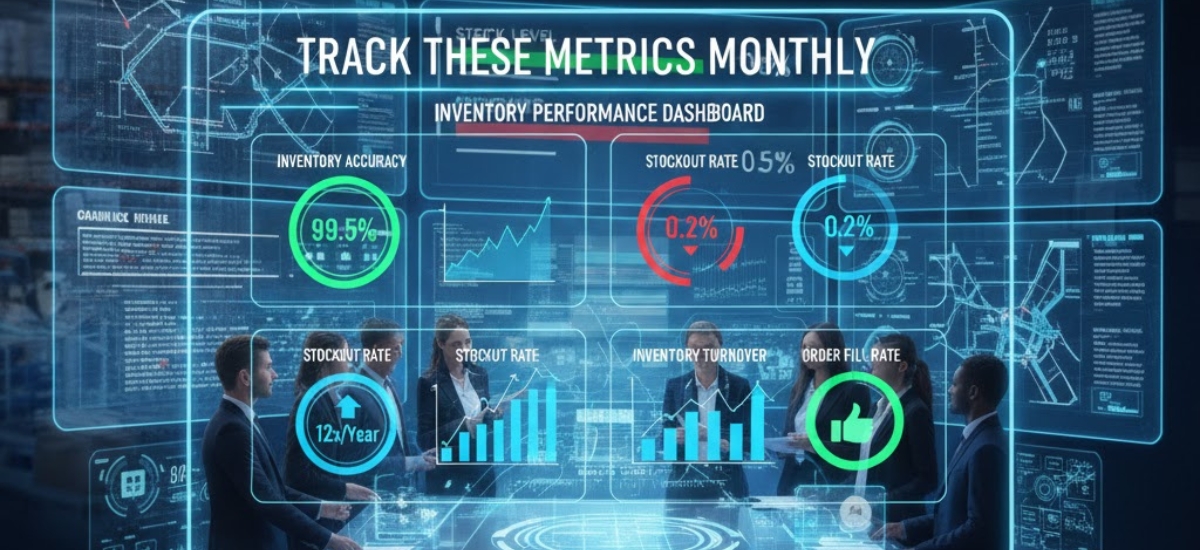
Track these metrics monthly to ensure your inventory management continues improving:
Target 95%+ (count matches system records)
How many times you sell through inventory annually (higher is better)
Percentage of time best-sellers are unavailable (target under 2%)
Stock over 90 days old as percentage of total value
Loss due to theft, damage or error as percentage of sales
WMS IT implements Dynamics 365 Business Central and Tasklet Mobile WMS for Australian retailers and distributors seeking to achieve 90%+ inventory accuracy.
See how Australian businesses have improved inventory performance with WMS IT:
Real-time inventory management through ERP systems represents one of the highest-ROI improvements Australian retailers can make. Moving from 65% to 92%+ accuracy isn’t just about preventing embarrassing stockouts—it’s about unlocking hundreds of thousands of dollars in recovered revenue, reduced carrying costs and improved cash flow.
The technology exists and has been proven across thousands of retail implementations. The question isn’t whether real-time inventory visibility works, but how quickly you’ll implement it relative to your competitors. Every month of delay costs you in lost sales and excess inventory carrying costs.
If you’re ready to transform your inventory accuracy, Work Made Simple (WMS) specializes in implementing inventory-optimized ERP solutions for Australian retailers. Our team brings deep expertise in Dynamics 365 Business Central and LS Retail to help you achieve measurable improvements within months.
Before implementing, make sure you’re selecting inventory-focused ERP features that align with your specific business requirements.
Devinder Sareen is a Microsoft Dynamics 365 Business Central and LS Retail partner with 20+ years of ERP implementation experience across Australian retail, distribution and manufacturing.
ERP improves accuracy through automated data capture (barcode scanning eliminates manual entry), real-time synchronization (updates happen instantly across all channels), cycle counting workflows and variance alerts that flag discrepancies immediately for investigation.
Real-time visibility means every transaction—sale, return, transfer or receipt—updates inventory records instantly across all systems and locations. There’s no delay or batch processing, so everyone works from current, accurate data at all times.
Calculate recovered revenue from reduced stockouts (annual revenue × current stockout rate × 0.7 conversion factor), plus carrying cost savings from excess inventory reduction (excess value × 25% annual carrying cost × reduction percentage). Most retailers see 6-figure annual benefits.